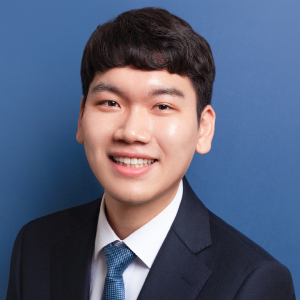
My teaching experience includes teaching an undergraduate-level macroeconomics course, assisting in PhD-level courses, and providing tailored support to students to enhance their learning.
Instructor
Intermediate Macroeconomics (Undergraduate, UTennessee) (Fall 2025, Spring 2026)
Instructor of Record
Teaching Assistant
Macroeconomic Analysis I (PhD, Duke University) (Fall 2020)
Assisted Professors Craig Burnside and Cosmin Ilut. Led problem-solving sessions, held office hours, and graded problem sets and exams.
Macroeconomic Analysis II (PhD, Duke University) (Spring 2021)
Assisted Professors Andrea Lanteri and Francesco Bianchi. Led problem-solving sessions, held office hours, and graded problem sets and exams.
International Trade (PhD, Duke University) (Fall 2024, Spring 2025)
Assisted Professor Rafael Dix-Carneiro in grading problem sets and exams.
Teaching Statement
My teaching statement summarizes my philosophy and approach to teaching economics. Click the button below to read the full statement.
As an educator in international trade, macroeconomics, and environmental economics, my primary goal is to encourage students to become active learners who are intellectually curious about real-world problems. I strive to equip students from diverse backgrounds and experiences with the tools necessary to approach these problems using logical reasoning, empirical evidence, and sound methodology.
Relevance and Real-World Application of Economics: The first step to meaningful and lasting learning is helping students recognize the value of the material beyond fulfilling a course requirement. When I served as a teaching assistant for PhD-level macroeconomics, I emphasized key concepts like general equilibrium, consumption smoothing, and income and substitution effects that are widely applicable across different fields. I also focused on techniques that are valuable beyond macroeconomics, such as first-order Taylor approximation and numerically solving structural models using MATLAB.
Clear and Effective Communication: Effective communication is central to effective teaching. Based on my experiences as a student, teaching assistant, and seminar presenter, I have come to realize that even the most valuable knowledge can appear dull if presented poorly. To refine my communication skills, I enrolled in Duke University’s Certificate in College Teaching (CCT) program, which emphasizes best practices in teaching and learning.
Tailored Support for Diverse Learners: Finally, I believe it is crucial that every student in my class understands the key takeaways, regardless of their background or prior knowledge. This belief stems from my own experience as a first-year PhD student who initially struggled with coursework. With targeted support, I was able to overcome these challenges and now strive to provide the same level of support to my students.
Having been a student for over a decade, I have experienced the transformative power of effective teaching, and I firmly believe it can change students’ academic trajectories. My goal as an educator is to equip students with the knowledge and skills necessary for success in both their careers and personal lives.